









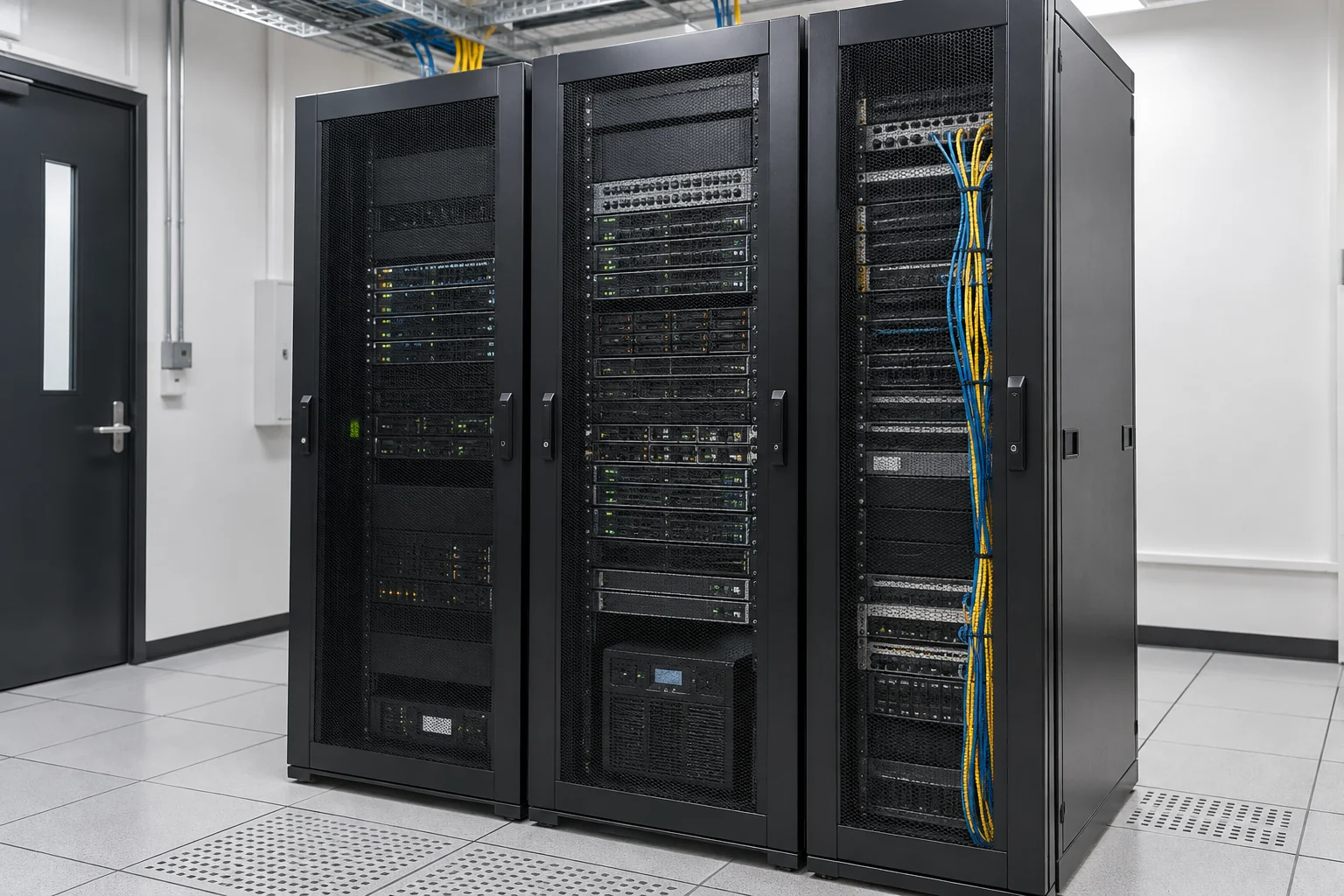
Back up data. Verify recovery.
Include on-site, off-site and offline or immutable backups in recovery planning, selecting by system, retention and operational needs.
Backup and retention
Review important systems, data volumes and retention to plan local and off-site backups.
Isolation and permissions
Assess immutable storage and Object Lock by platform capability, separating backup and administrator accounts.
Recovery and follow-up
Verify restores with actual work data, recording results and follow-up owners.
3-2-1-1-0 is a backup-planning approach. Specify capacity, platform capabilities and recovery objectives in the agreed solution and test results.
Explore protection, response and recoveryOn this page 7 sections
Local and offsite backups
Solutions can combine file servers, local NAS, offsite object storage and Veeam. When choosing locations, connectivity and immutability, review product capabilities, service regions and actual data flows together.
Four protection approaches
- Segment file servers from office networks and manage inter-zone access through gateway policies
- Dedicated NAS backup connections and administrative permissions
- Offline or scheduled-power backups with verified schedules and health checks
- Encrypted offsite transfers and pull-based operation, separating read permissions from modification or deletion
3-2-1-1-0 and recovery verification
Check multiple copies, different media, offsite copies, offline or immutable copies and recovery verification against the actual architecture. Encryption does not replace integrity checks or recovery tests. Agree RPO and RTO against test results.
View full service informationExpand the remaining 4 sections for configurations, applications and service arrangements
Veeam and object locking
Assess Veeam Backup & Replication, S3 Object Lock and related products by version. Confirm Veeam Data Cloud Vault regional availability, locking modes and permissions during selection, including whether they meet the organisation's storage-location and retention requirements.
Scope of deployment diagrams
Examples show VLANs, dedicated NAS IPs, Hyper-V, reverse FTPS and power modules. Example IPs, power schedules and devices explain architecture only. Test routing, backups and recovery before use rather than copying the example directly.
Data location and incident boundaries
Government or financial project requirements for location and transfer depend on specific rules, policies and contracts. Backups reduce data-loss risks, while leakage also requires access and outbound controls. Whether data must remain in Hong Kong depends on the actual requirements.
Verify recovery to assess incident readiness
Plan local, offsite, isolated or immutable storage according to system and data importance, then verify recovery. For Veeam or other solutions, confirm service regions, data flows, licences and storage-lock conditions before agreeing acceptable data loss and recovery times. Check government and financial location requirements individually against applicable contracts and rules.
Information and references
When is this service suitable?
Common needs
- Files are spread across computers and servers, raising concerns about deletion or hardware failure.
- Backups exist, but recovery capability or responsibility is unclear.
- You want a clearer recovery plan for ransomware or outages.
Which service do I need?
- Business data backup solutions
Plan backups and restore tests around the data scope.
- Server maintenance
Review system health and maintenance responsibilities.
- Business cybersecurity
Discuss incident handling alongside data protection.
Prepare for an enquiry
- Describe the data types and approximate volume; no data upload is needed.
- Existing backup locations, frequency and previous restore tests.
- Acceptable data loss and business downtime.
For an initial enquiry, describe the issue and equipment only. Do not submit passwords or verification codes. The team will arrange a secure channel for sensitive documents and incident records.
Enquire about business backup and recoveryCybersecurity and AI useExplore security planning, responsibilities and acceptance considerations
Cybersecurity · Safe AI use
Business backup and recovery: security planning priorities
「Enterprise backup and recovery solutions」 includes the following security priorities; measures, tests and deliverables are specified in the proposal.
- Data and retentionConfirm systems and data to back up, storage locations, retention periods and acceptable recovery objectives.
- Backup protectionDiscuss separation of backup and production permissions, offline or isolated copies, and verify immutability against product capabilities and configuration.
- Recovery verificationPlan restore tests, alert recipients and incident approvals, with clear business and maintenance-team responsibilities.
AI considerationsFor AI workloads, define data, prompt settings, knowledge bases and tool configurations to retain. AI agents should not have permission to delete every backup.
Planning and acceptance recordsBackup scope and retention schedule, access and isolation settings, restore-test records and recovery responsibilities.
You may also want to know
With a limited budget, what data and systems should an SME list first?
Identify files and servers essential to daily operations and current backup methods, explaining acceptable data loss and downtime. Prioritise local, offsite or isolated copies and recovery testing accordingly.
Must all Hong Kong government or personal data legally remain in Hong Kong?
There is no single rule covering all such data. Check specific legislation, departmental policies, contracts and processing conditions; do not infer from the PDPO that every dataset must remain in Hong Kong.